
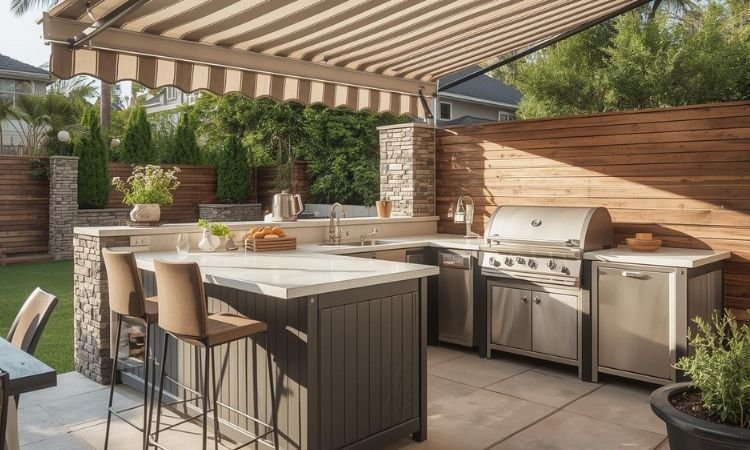
Outdoor kitchen projects consume $20,000-$60,000 on average with 48% of homeowners reporting significant design regrets within first year—inadequate storage forcing constant indoor trips, poor appliance placement creating workflow bottlenecks, or insufficient weather protection limiting usability to perfect-weather days only. The costly mistakes happen when prioritizing Instagram aesthetics over practical function that determines whether outdoor kitchens get used weekly or sit abandoned.
Outdoor kitchen design ideas reveal which layouts and features deliver genuine cooking efficiency and year-round utility versus impressive-looking installations that ignore real-world use patterns. The best designs balance cooking capability with entertainment flow creating spaces that enhance outdoor living rather than becoming expensive decorative elements that complicate simple grilling.
We’re covering 11 outdoor kitchen design ideas featuring configurations that prioritize function alongside aesthetics. These proven approaches work across budgets and climates providing the practical performance and entertainment value that makes outdoor kitchen investment worthwhile rather than becoming cautionary tale about form over function.
Key points we’re exploring:
- Layout configurations optimizing cooking workflow and guest interaction
- Weather protection strategies extending seasonal usability
- Appliance selection matching actual cooking patterns
- Material choices balancing durability with appearance
- Budget allocation priorities maximizing value
- Integration with existing outdoor living spaces
Essential Qualities of Outdoor Kitchen Designs
Protected Cooking Zones Extend Usability: Covered areas with minimum 10×12 foot overhead protection allow cooking during light rain and provide shade during intense sun extending outdoor kitchen use from 60-80 days annually to 150-200 days in most climates. It’s like pavilions where shelter multiplies function. The weather protection transforms outdoor kitchens from fair-weather luxuries into practical year-round amenities justifying substantial investment.
Efficient Work Triangle Reduces Wasted Movement: Positioning grill, refrigeration, and prep sink within 15-25 foot total distance creates ergonomic workflow while excessive spacing forces hundreds of unnecessary steps during typical meal preparation. It’s like commercial kitchens where efficiency determines productivity. The optimized layout improves cooking experience while preventing the workflow frustration that discourages outdoor kitchen use.
Adequate Counter Space Enables Real Cooking: Minimum 6-8 linear feet of counter surface allows simultaneously handling raw ingredients, cooked food, and plating without dangerous cross-contamination or constant surface clearing that indoor cooks never tolerate. It’s like professional kitchens where workspace determines capability. The generous counters separate functional outdoor kitchens from glorified grill stations that frustrate serious cooking.
Integrated Seating Maintains Social Connection: Bar seating or nearby dining areas within 8-10 feet of cooking zone keeps hosts engaged with guests rather than isolated during meal preparation that defeats entertaining purposes. It’s like open-concept homes where visual connection matters. The proximity design enables conversation during cooking making outdoor kitchens genuinely entertainment-enhancing rather than cook-isolating.
11 Outdoor Kitchen Design Ideas
Create functional entertainment spaces with these outdoor kitchen design ideas featuring layouts that balance cooking efficiency with social interaction.
L-Shaped Covered Design
Build L-shaped layouts under pergola or solid roof creating protected cooking and prep zones. The perpendicular arrangement with grill on one leg and sink-refrigerator on other establishes efficient work triangle while overhead coverage allows cooking in varied weather. It’s like corner utilization where angles create efficiency.
Include minimum 8-foot ceiling height accommodating tall cooks and heat dissipation. Position seating along open sides maintaining visual connection. Costs run $25,000-$55,000 for complete covered L-shaped outdoor kitchen. This outdoor kitchen design maximizes protection and workflow simultaneously.
Linear Galley Configuration
Design straightforward linear kitchens along house walls or fence lines measuring 12-16 feet long. The galley arrangement with appliances and prep zones in logical sequence suits narrow side yards while proximity to house simplifies utility connections. It’s like galley kitchens where efficiency compensates for width.
Include upper cabinets or shelving maximizing vertical storage in limited width. Maintain 4-5 feet clearance in front allowing comfortable movement. Expect costs $18,000-$40,000 depending on appliance selection. This outdoor kitchen design solves challenging narrow space limitations.
Island-Focused Layout
Center design around substantial 10×4 foot island with perimeter counters providing secondary prep and serving areas. The island-dominant approach creates natural gathering point while surrounding workspace handles meal preparation supporting flow. It’s like kitchen islands where centrality drives interaction.
Position island 4-5 feet from perimeter elements maintaining circulation. Include bar seating on two sides accommodating 6-8 guests. Costs range $22,000-$50,000 for island-centered complete outdoor kitchen. This outdoor kitchen design prioritizes entertainment and guest interaction.
Compact Corner Setup
Utilize patio corners with efficient 8×8 foot kitchens providing full cooking capability in minimal footprint. The corner placement with appliances along two walls creates tight work triangle while preserving majority of patio for seating and relaxation. It’s like efficiency apartments where compact design serves essential needs.
Include vertical storage and fold-down prep surfaces maximizing limited space. Choose smaller-scale appliances without sacrificing quality. Expect costs $12,000-$28,000 for complete corner outdoor kitchen. This outdoor kitchen design delivers function without dominating small patios.
Pavilion Kitchen Room
Build freestanding pavilion structures housing complete outdoor kitchens with 14×16 foot minimum coverage. The dedicated structure with permanent roof, optional walls, and integrated lighting creates true outdoor room extending home living space. It’s like pool houses where structure defines purpose.
Include ceiling fans and optional screens or roll-down shades enhancing comfort. Wire for ample lighting and electrical outlets. Costs run $35,000-$75,000 including pavilion construction and kitchen equipment. This outdoor kitchen design creates substantial year-round outdoor living investment.
Modular Component System
Assemble prefabricated outdoor kitchen modules allowing phased installation and future expansion. The individual units—grill station, sink cabinet, refrigerator housing, storage sections—connect creating cohesive kitchens while budget flexibility enables starting small. It’s like building blocks where components combine flexibly.
Match finishes and heights across all modules ensuring visual consistency. Begin with essentials adding features as needs and budget dictate. Expect costs $8,000-$20,000 for quality 3-4 module starter system. This outdoor kitchen design provides flexibility through modular approach.
Two-Zone Separation
Divide outdoor kitchens into cooking zone and beverage-serving zone separated by 8-10 feet reducing congestion during entertaining. The dual-station approach with grill-prep area distinct from bar-refrigeration zone allows multiple people working simultaneously without collision. It’s like restaurant stations where separation enables efficiency.
Connect zones with continuous countertop or matching materials maintaining visual unity. Position bar zone nearer seating areas. Costs range $20,000-$45,000 for complete two-zone outdoor kitchen. This outdoor kitchen design handles large gatherings through strategic separation.
Minimalist Grilling Station
Create focused designs emphasizing quality over quantity with premium built-in grill, generous prep surfaces, and essential storage without appliance overload. The edited approach with 8-10 linear feet of functional workspace delivers practical cooking without excessive features that inflate costs. It’s like capsule wardrobes where edited selection serves better.
Invest budget in quality grill, durable countertops, and weather-resistant cabinets rather than spreading across numerous mediocre appliances. Include basics superbly executed. Expect costs $10,000-$22,000 for quality minimalist outdoor kitchen. This outdoor kitchen design maximizes value through strategic focus.
U-Shaped Entertainment Hub
Build U-shaped configurations creating three-sided work areas with interior cooking zones and exterior perimeter offering continuous bar seating. The wraparound design provides maximum prep space while accommodating 10-15 guests around edges. It’s like chef’s counters where cooking becomes interactive entertainment.
Requires substantial 16×12 foot minimum patio area accommodating kitchen plus circulation. Include appliances along back wall with prep extending along sides. Costs run $30,000-$65,000 for substantial U-shaped installation. This outdoor kitchen design suits serious entertainers with adequate space.
Screened Porch Integration
Incorporate outdoor kitchens within screened porches combining weather protection with insect control. The enclosed design allows evening entertaining without bug spray while maintaining outdoor ambiance through screens and natural airflow. It’s like three-season rooms where screening extends usability.
Include adequate ventilation for cooking equipment and fire-rated construction meeting codes. Design for year-round or seasonal use affecting material choices. Expect costs $25,000-$55,000 including screening and kitchen installation. This outdoor kitchen design maximizes comfort through insect protection.
Poolside Service Kitchen
Position compact service kitchens near pools providing beverage service, snack preparation, and towel storage without full cooking capabilities. The support station with refrigeration, ice maker, sink, and storage handles pool entertaining while main cooking happens elsewhere. It’s like pool bars where convenience matters most.
Include weatherproof storage for pool supplies and towels alongside kitchen functions. Keep design simple and maintenance-friendly given wet environment. Costs range $8,000-$18,000 for poolside service station. This outdoor kitchen design supports specific pool entertaining needs.
Planning Outdoor Kitchen Designs
Assess Actual Cooking Patterns: Inventory typical outdoor meals—simple grilling, elaborate dinners, casual entertaining—before determining appliance needs preventing expensive features that never get used. It’s like honest evaluation where reality guides investment. The usage-based planning creates outdoor kitchens matching lifestyle rather than aspirations.
Prioritize Weather Protection Investment: Allocate 25-35% of budget to quality covering—solid roof, retractable awning, or substantial pergola—extending usability dramatically versus spending entirely on appliances used only perfect-weather days. It’s like foundations where shelter determines overall utility. The protection investment multiplies outdoor kitchen value.
Plan Utilities During Initial Construction: Run electrical, gas, water, and drainage lines before hardscaping and finishing preventing $5,000-$12,000 retrofitting costs disrupting completed patios. It’s like rough-in work where sequencing affects expense. The comprehensive utility installation during construction saves significantly.
Include Generous Storage Capacity: Design 20-30% more storage than initially seems necessary accommodating grilling tools, serving pieces, seasonings, cleaning supplies, and entertainment essentials that accumulate preventing constant indoor trips. It’s like closet planning where excess beats inadequacy. The ample storage maintains outdoor cooking independence.
Frequently Asked Questions About Outdoor Kitchen Design
How Much Should You Budget for Outdoor Kitchen?
Basic functional outdoor kitchens with quality grill, minimal counter space, and simple storage cost $8,000-$15,000. Mid-range designs with multiple appliances, substantial counters, and weather protection run $18,000-$40,000. Elaborate installations with premium appliances, extensive coverage, and custom finishes reach $45,000-$100,000.
Allocate budget prioritizing essentials—grill, counters, storage, weather protection—before adding specialty appliances. The strategic spending creates functional kitchens within realistic budgets avoiding debt-financed features that rarely get used.
What Appliances Are Actually Essential?
Quality built-in grill represents only truly essential appliance. Highly valuable additions include refrigerator for beverages and condiments, sink for prep and cleanup, and side burner for sauces. Specialty items—pizza ovens, warming drawers, ice makers—suit specific entertaining styles but aren’t universally necessary.
Start with core appliances experiencing actual use patterns before adding features. The phased approach prevents expensive capabilities that seemed appealing but prove impractical given real cooking habits.
How Do You Design for Year-Round Use?
Include substantial overhead coverage protecting from rain and snow. Add heating elements—fire features, infrared heaters, enclosed sides—extending comfort into shoulder seasons. Install lighting supporting evening use. Use weather-resistant materials handling freeze-thaw cycles. Consider partial enclosures transforming open kitchens into three-season spaces.
Year-round capability requires significant additional investment but transforms outdoor kitchens from 60-day luxuries into 200+ day practical spaces justifying costs through extended utility.
Should Outdoor Kitchen Match House Style?
Yes—matching materials, colors, and architectural details creates cohesive appearance adding value while clashing styles suggest afterthought addition reducing appeal. Contemporary homes suit clean-lined outdoor kitchens while traditional architecture pairs with classic designs. The coordinated approach integrates outdoor kitchens architecturally.
Exact matching isn’t required but complementary materials and proportional design maintains visual harmony. The thoughtful coordination creates intentional appearance rather than obvious addition.
What About Resale Value Considerations?
Quality outdoor kitchens typically return 50-80% of investment at resale in appropriate markets—warm climates, higher-end neighborhoods, homes with adequate outdoor space. Overly customized or poorly designed installations return less. Basic functional designs appeal broadly while elaborate specialty features limit buyer pool.
Location and execution quality determine whether outdoor kitchens add value or simply represent personal enjoyment without financial return. The market awareness guides investment decisions appropriately.
Creating Your Outdoor Kitchen Space
Outdoor kitchen design ideas reveal that practical function determines satisfaction more than appliance quantity or finish expense. The well-planned layouts with adequate counter space, efficient workflow, and weather protection deliver years of regular use while impressive-looking installations ignoring cooking realities become expensive disappointments. The function-first approach creates outdoor kitchens justifying investment through enhanced lifestyle.
Start by honestly assessing cooking patterns, entertaining frequency, and climate reality before determining scope and features. Prioritize quality essentials—excellent grill, generous counters, adequate storage, weather protection—over appliance variety or elaborate finishes. Invest in professional design for layouts and utility rough-in preventing expensive mistakes. The strategic planning creates outdoor kitchens that enhance daily life rather than becoming cautionary tales about misplaced priorities.
What outdoor kitchen feature would transform your entertaining style? Share your outdoor cooking priorities below!