Outdoor kitchen investments average $15,000-$35,000 with 65% of homeowners identifying islands as most-used feature, yet poor planning creates cramped work triangles requiring constant repositioning or oversized installations that dominate patios leaving inadequate seating areas. The sizing failures happen when copying indoor kitchen dimensions ignoring outdoor spatial requirements and entertainment flow patterns.
Outdoor kitchen island ideas reveal which configurations deliver genuine cooking efficiency and social interaction versus layouts that look impressive but function awkwardly. The best designs balance adequate workspace with appropriate scale creating islands that enhance outdoor cooking and entertaining rather than becoming expensive obstacles consuming patio real estate.
We’re covering 10 outdoor kitchen island ideas featuring layouts that optimize both function and flow. These practical approaches work across patio sizes providing the workspace capacity and entertainment-friendly design that makes outdoor kitchen islands worthwhile centerpieces rather than regrettable space hogs.
Key points we’re exploring:
- Island sizing appropriate for different patio dimensions
- Layout configurations maximizing workflow efficiency
- Feature integration balancing utility with budget
- Material selections withstanding outdoor conditions
- Seating arrangements enhancing entertainment value
- Construction approaches from DIY to professional builds
Essential Qualities of Outdoor Kitchen Islands
Appropriate Scale Matches Patio Proportions: Islands consuming more than 25-30% of patio square footage overwhelm outdoor spaces leaving inadequate circulation and seating areas while undersized 4×6 foot islands lack workspace for serious cooking requiring adequate prep surfaces. It’s like furniture scaling where proportion determines comfort. The properly sized islands balance cooking capability against remaining outdoor living space.
Strategic Placement Optimizes Workflow: Positioning islands 42-48 inches from perimeter counters or house walls creates efficient work triangles allowing comfortable movement while closer spacing causes traffic jams and farther distances waste steps during cooking. It’s like kitchen design where clearance determines function. The thoughtful placement enables smooth cooking flow without excessive walking.
Weather-Resistant Construction Prevents Deterioration: Concrete block, steel frame, or masonry construction with outdoor-rated finishes withstands continuous weather exposure that wood frames or inappropriate materials can’t survive beyond 3-5 years without significant maintenance or replacement costing $8,000-$15,000. It’s like building foundations where structural integrity determines longevity. The durable construction justifies initial investment through decades of reliable performance.
Multi-Level Design Separates Functions: Raised bar-height sections for seating distinct from standard 36-inch prep surfaces create defined zones allowing guests interacting without crowding cooking areas while single-height islands force choosing between workspace and social interaction. It’s like room divisions where levels separate purposes. The tiered design maximizes island utility through functional separation.
10 Outdoor Kitchen Island Ideas
Create functional entertaining spaces with these outdoor kitchen island ideas featuring configurations that balance cooking efficiency with social interaction.
L-Shaped Cooking Island
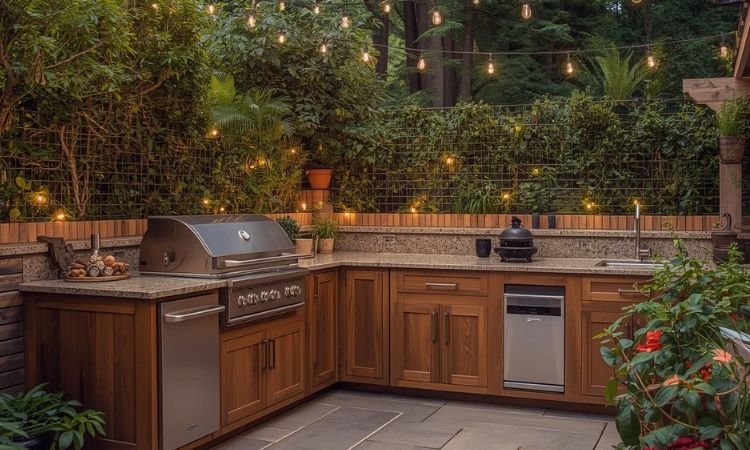
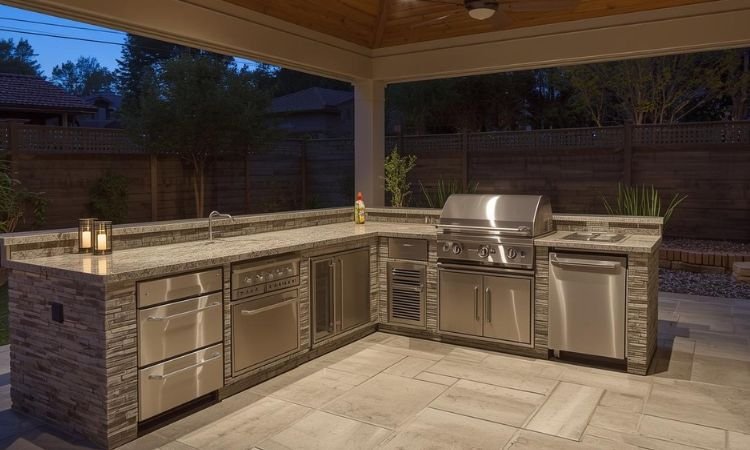
Design L-shaped islands with one leg hosting grill and cooking equipment while perpendicular section provides prep workspace. The angled configuration creates natural work triangle while corner location offers bar seating opportunities. It’s like efficient kitchens where angles multiply functionality.
Include minimum 8-foot length on cooking leg and 6-foot on prep side. Position grill at corner allowing access from both sides. Costs run $8,000-$18,000 for complete L-shaped island with quality appliances. This outdoor kitchen island maximizes workspace within compact footprint.
Bar-Height Seating Island
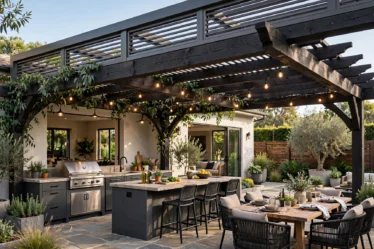
Build islands with raised bar-height counter on one side accommodating 4-6 bar stools while opposite side maintains standard prep height. The two-level design allows guests socializing at bar while cook works comfortably at lower surface. It’s like restaurant kitchens where counter separates dining from cooking.
Include 12-15 inch overhang on bar side supporting knee room. Raise bar section to 42 inches with 36-inch work surface opposite. Expect costs $6,000-$14,000 depending on size and finishes. This outdoor kitchen island creates entertainment-friendly cooking space.
Compact Grill Station
Create focused 4×8 foot islands centered on quality built-in grill with flanking prep surfaces. The streamlined approach suits smaller patios providing essential cooking capability without overwhelming space. It’s like efficiency apartments where compact design serves core needs.
Include storage beneath and side burner if space allows. Frame with stone or stucco matching home exterior. Costs range $5,000-$10,000 for basic but functional island. This outdoor kitchen island delivers maximum function per square foot invested.
U-Shaped Entertainment Hub
Build U-shaped islands creating three-sided work areas with interior workspace and exterior perimeter offering continuous bar seating. The wraparound configuration provides generous prep space while seating 8-12 guests around edges. It’s like chef’s tables where cooking becomes performance.
Requires minimum 12×10 foot patio area accommodating island plus circulation. Include appliances along back wall with prep zones flanking. Expect costs $15,000-$35,000 for substantial U-shaped installation. This outdoor kitchen island suits serious entertainers with adequate patio space.
Rolling Cart Island
Use heavy-duty stainless steel or teak rolling carts providing movable island flexibility. The wheeled units with locking casters offer prep surface and storage while allowing repositioning or complete removal maximizing patio versatility. It’s like furniture on wheels where mobility creates options.
Choose commercial-grade carts with 400+ pound capacity and weather-resistant construction. Include towel bars and tool hooks maximizing utility. Costs run $800-$2,500 for quality rolling islands. This outdoor kitchen island suits renters or those wanting flexibility.
Rectangular Prep Island
Install straightforward rectangular islands measuring 6-8 feet long by 3-4 feet deep providing ample prep workspace without cooking appliances. The simple design focuses on counter area and storage while main grill remains on perimeter allowing island serving multiple stations. It’s like butcher blocks where workspace takes priority.
Include generous storage beneath and possibly sink installation. Keep design clean and functional. Expect costs $4,000-$9,000 for quality prep-focused island. This outdoor kitchen island suits those with existing grill wanting additional workspace.
Pizza Oven Centerpiece
Build islands featuring wood-fired or gas pizza ovens as focal point with surrounding prep surfaces supporting pizza making. The specialty appliance creates entertainment draw while flanking counters provide dough rolling and topping areas. It’s like pizzerias where oven becomes theater.
Include heat-resistant surfaces adjacent to oven and firewood storage if wood-fired. Position oven allowing guests watching cooking process. Costs range $8,000-$20,000 with quality oven installation. This outdoor kitchen island creates unique entertaining feature.
Modular Component System
Assemble prefabricated modular island units allowing custom configurations. The individual sections—grill cabinet, refrigerator housing, storage units—connect creating cohesive appearance while allowing future expansion or reconfiguration. It’s like building blocks where flexibility enables evolution.
Match finishes across components ensuring visual consistency. Start with essentials adding sections as budget allows. Expect costs $6,000-$15,000 for quality modular 3-4 piece system. This outdoor kitchen island provides flexibility through component approach.
Concrete Countertop Island
Pour custom concrete counters over masonry base creating seamless surfaces with integrated features—drain boards, cutting board inserts, bottle openers. The moldable material allows unlimited customization while providing heat resistance and durability. It’s like sculptural furniture where form follows imagination.
Include fiber reinforcement preventing cracking and quality sealer protecting surface. Embed features during pour avoiding aftermarket additions. Costs run $10,000-$22,000 for custom concrete island with integrated features. This outdoor kitchen island delivers personalized design through custom fabrication.
Linear Galley Island
Create long narrow islands measuring 10-12 feet by 2.5-3 feet providing substantial workspace without consuming excessive patio width. The linear design suits narrow outdoor spaces while generous length accommodates multiple work zones. It’s like galley kitchens where length compensates for width.
Position parallel to house wall or patio edge maintaining traffic flow. Include cooking equipment, prep space, and storage along length. Expect costs $7,000-$16,000 for extended linear island. This outdoor kitchen island fits challenging narrow patio configurations.
Planning Outdoor Kitchen Islands
Calculate Clearance Requirements: Maintain 42-48 inches between island and perimeter elements allowing comfortable passage and cabinet/appliance access while closer spacing creates bottlenecks during cooking and entertaining. It’s like hallway width where circulation determines comfort. The adequate clearance prevents cramped outdoor kitchens.
Integrate Essential Utilities Early: Run electrical, gas, and plumbing lines during initial construction rather than expensive retrofitting later costing $3,000-$8,000 in trenching and connections through finished surfaces. It’s like rough-in work where timing affects costs dramatically. The comprehensive utility planning enables full island functionality.
Consider Dominant Wind Patterns: Position grills and cooking equipment downwind from primary seating areas preventing smoke and cooking odors affecting guests during entertaining. It’s like campfire placement where wind direction determines comfort. The climate-aware orientation improves outdoor cooking experience.
Include Adequate Storage: Plan cabinet and drawer space for tools, serving pieces, and supplies preventing constant trips indoors that disrupt cooking flow and undermine outdoor kitchen investment. It’s like workspace organization where proximity determines efficiency. The generous storage maintains outdoor cooking independence.
Frequently Asked Questions About Outdoor Kitchen Islands
What Size Should Outdoor Kitchen Island Be?
Minimum functional islands measure 6×3 feet providing basic grill and prep space. Comfortable cooking islands span 8-10 feet long by 3-4 feet deep accommodating grill, side burner, and adequate prep surfaces. Large entertaining islands reach 10-14 feet offering extensive workspace and bar seating.
Match island size to patio dimensions and cooking ambitions. Oversized islands dominate small patios while undersized installations frustrate serious outdoor cooks. The appropriate sizing balances capability with available space.
How Much Does Outdoor Kitchen Island Cost?
Basic DIY masonry islands with mid-range appliances cost $4,000-$8,000. Professional installations with quality materials and appliances run $8,000-$20,000. Elaborate custom islands with premium finishes and multiple appliances reach $20,000-$45,000.
Appliances represent 40-50% of total costs with built-in grills alone ranging $1,500-$6,000. Material choices and feature selections dramatically impact final investment. The cost variation reflects enormous range in scale and quality.
Can You Build DIY Outdoor Kitchen Island?
Yes—concrete block construction with tile or stone veneer suits capable DIYers saving 40-60% versus professional installation. Basic masonry skills, proper base preparation, and patience create functional islands. Complex features like gas connections require licensed professionals regardless.
Allow 3-6 weekends for complete DIY island project depending on size and complexity. The labor investment represents significant commitment requiring realistic skill assessment before starting.
What Appliances Should Island Include?
Essential islands include quality built-in grill as minimum. Useful additions include side burner for sauces, small refrigerator for beverages and condiments, sink for prep and cleanup. Specialty items like pizza ovens, warming drawers, or ice makers suit specific entertaining styles.
Start with core appliances adding features as budget and use patterns justify. The phased approach prevents over-building expensive capabilities that never get used.
How Do You Finish Outdoor Kitchen Island?
Stone veneer, stucco, tile, or concrete coatings provide weather-resistant finishes matching home architecture. Choose materials withstanding moisture, temperature swings, and UV exposure without fading or deteriorating. Countertops require granite, concrete, tile, or other outdoor-rated surfaces.
Finish selection dramatically affects appearance and durability. Premium finishes cost $40-$100 per square foot versus basic stucco at $8-$15 per square foot. The finish quality determines both aesthetics and maintenance requirements.
Creating Your Outdoor Kitchen Island
Outdoor kitchen island ideas reveal that thoughtful sizing and placement determine success more than appliance quantity or finish expense. The properly scaled islands with efficient layouts deliver practical cooking capability and entertainment value while oversized or poorly positioned installations consume budgets and patio space without proportional benefit. The balanced approach creates outdoor kitchen islands justifying investment through regular use and lasting satisfaction.
Start by measuring available patio space and calculating realistic island dimensions maintaining adequate clearances. Prioritize layout efficiency and essential appliances over elaborate features that complicate construction without improving function. Choose weather-appropriate materials and professional installation for utilities ensuring safe reliable operation. The strategic planning creates outdoor kitchen islands that enhance outdoor living rather than becoming expensive patio monuments.
What outdoor kitchen island feature would transform your entertaining? Share your outdoor cooking priorities below!