
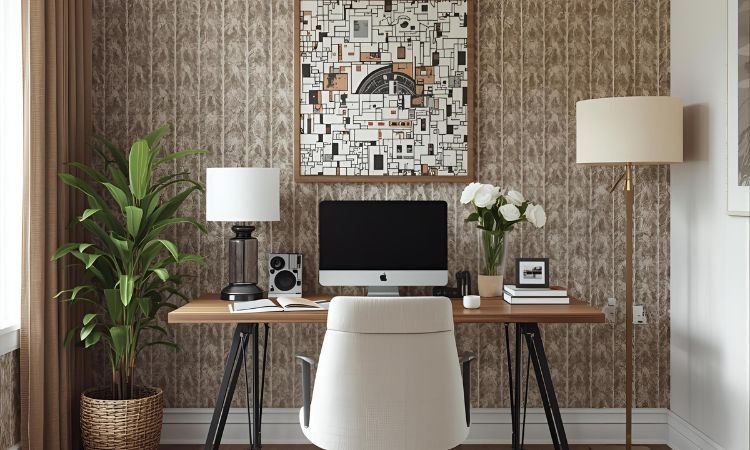
Working from a tiny spare bedroom or a desk squeezed into the corner of your living room? Yeah, it’s not exactly the spacious home office setup you see in those magazine spreads. But here’s the good news—your walls can do a lot of heavy lifting when floor space is tight.
The right wall decor doesn’t just make your workspace look better. It actually helps you stay organized, focused, and maybe even a little more creative during those long work-from-home days. And when you’re smart about what goes up there, you can transform even the smallest corner into a space that feels like an actual office instead of just… wherever you happened to set your laptop.
This guide covers practical wall decor ideas that work in small home offices without making the space feel cramped or chaotic.
Why Wall Decor Actually Matters in a Small Home Office
When you’re working with limited square footage, walls become your best friend. They’re basically free real estate for storage, organization, and making your workspace feel more defined—especially if your “office” is really just part of your bedroom or living room.
Good wall decor does a few things at once. It keeps you organized by getting stuff off your desk. It improves your mood when you’re staring at the same four walls for eight hours. And honestly, it helps create that mental boundary between “work mode” and “home mode” even when they’re happening in the same physical space.
Plus, when your workspace looks intentional and put-together, it’s easier to actually sit down and focus. There’s something about a well-organized wall that makes you feel more productive before you even start working.
Choosing the Right Style for Your Small Workspace
Before you start hanging stuff randomly, think about what vibe you want. Your wall decor style should match your desk, chair, and the overall feel of the room.
Minimalist works great for small spaces. Clean lines, simple frames, one or two functional pieces. Nothing extra, nothing distracting. If you get overwhelmed easily, this is probably your style.
Modern means sleek shelves, neutral tones, maybe some metal accents. Think black frames, white boards, wood with simple finishes. It looks professional without being boring.
Cozy or natural brings in plants, warm wood tones, maybe some soft colors like sage green or terracotta. This style makes your workspace feel less sterile and more comfortable.
Professional leans toward neutral art, symmetrical layouts, and organized boards. Good if you take a lot of video calls and want a clean background.
Match your wall decor to whatever’s already in your space. If your desk is light wood, maybe your shelves should be too. If you’ve got a black desk chair, black frames might tie everything together. You don’t need everything to match perfectly, but having some common threads helps.
Smart Space-Saving Wall Decor Ideas
Alright, let’s get into what actually works on small home office walls.
Floating Shelves
These are perfect for getting books, supplies, or small plants off your desk without taking up floor space.
Go for narrow shelves—maybe 6 to 8 inches deep—so they don’t jut out too much. Mount them above your desk or on a side wall within easy reach.
Pegboard Organizers
Pegboards are having a moment, and for good reason. You can customize them with hooks and small shelves to hold headphones, charging cables, scissors, notepads—basically all those small items that usually clutter your desk.
Paint it to match your walls or go with natural wood.
Wall-Mounted File Holders
Vertical file organizers free up so much desk surface. Mount a metal or wire holder on the wall next to your desk for papers, folders, or magazines you’re actually using. Keeps things accessible but out of the way.
Minimalist Art or Motivational Quotes
A simple print or framed quote adds personality without visual noise. Stick with one or two pieces max in a small space.
Choose something that actually motivates you, not just generic “hustle” stuff that everyone has.
Whiteboards or Glass Boards
These are both functional and decorative. Use them for planning your week, tracking projects, or just jotting down random ideas.
Glass boards look a bit more modern and upscale if you want something that doesn’t scream “office supply store.”
Cork Board or Pin Board
Great for vision boards, reminders, inspiration photos, or those random sticky notes you always lose. Get one with a frame so it looks intentional instead of just stuck up there.
Wall-Mounted Lighting
Sconces or LED strip lights brighten your workspace without eating up desk real estate. Mount a reading light on the wall above your desk, or add LED strips under floating shelves for ambient lighting.
Vertical Plant Decor
Small hanging planters or propagation jars bring some life to your workspace without taking up desk space. Pothos, snake plants, or even just some propagated cuttings in glass bottles work great.
Floating Desk Extension Shelf
This is basically a narrow shelf mounted right above your desk. Perfect for your phone, a small plant, your coffee mug, or daily supplies you want within reach but not on your working surface.
Color and Texture Tips for Small Offices
Colors make a bigger difference than you’d think in small spaces. Light colors—whites, soft grays, pale blues—make the room feel more open and less claustrophobic. If your walls are already dark, you can still use light-colored frames and boards to brighten things up.
Add texture through fabric boards, canvas prints, or wooden shelves. Different textures make the space feel more interesting without adding clutter. A wood shelf, a fabric-covered cork board, and a metal pegboard all work together because they each bring something different.
Here’s the thing though: pick one accent color and stick with it. Maybe it’s a muted sage green that shows up in your plant pots, a small art print, and your desk accessories. Or a warm terracotta that ties a few elements together. But don’t go crazy with five different colors competing for attention.
Layout and Proportion Guide
Where you put stuff matters just as much as what you put up there.
Hang functional items like whiteboards and pegboards within arm’s reach from your desk chair. If you have to stand up and walk over every time you need something, you probably won’t use it.
Art should be at eye level—roughly 57 to 60 inches from the floor to the center of the piece. That’s standard gallery height and it just looks right.
Keep spacing consistent between items. If you’re hanging multiple frames or shelves, measure the gaps so they’re even. Random spacing makes small spaces feel messy.
Anchor your wall with one main piece—maybe your largest shelf or a statement board. Everything else should support that anchor piece, not compete with it.
Theme Ideas for Small Home Office Walls
If you want everything to feel cohesive, picking a theme helps. You don’t have to follow it religiously, but it gives you a starting point.
Scandinavian clean and bright: Light wood, white boards, simple black frames, minimal decor, lots of open space.
Natural and calm: Wood tones, plants everywhere, earthy colors like sage and clay, maybe some woven textures.
Modern monochrome: Black and white only. Sleek lines, geometric shapes, no color distractions.
Warm minimal: Cream and beige tones, warm wood, soft lighting, just a few carefully chosen pieces.
Creative boho: Light and curated—think macramé, plants, natural fibers, but not overdone. Still functional.
Tech-inspired: LED lights, glass boards, metal pegboards, lots of black and chrome, very streamlined.
Your theme influences everything—what kind of boards you get, what art style works, whether frames should be wood or metal, and how shelves are finished.
Decorating Around Different Areas
Above the Desk
This is prime real estate. Put your most-used items here—floating shelves for daily supplies, a whiteboard for tasks, or a statement art piece if you want something inspirational in your direct line of sight.
Side Wall
Perfect for art prints, framed certificates if you’re into that, or vertical organizers for files and folders. This wall doesn’t need to be super functional, so it’s a good spot for more decorative elements.
Corner Spaces
Floating corner shelves maximize awkward corners. Small pegboards fit nicely here too, or you could do a narrow LED light strip to brighten up a dark corner.
Behind the Door
People forget about this spot. Slim file holders, hooks for bags or headphones, or a dry-erase calendar work great here. Just make sure nothing sticks out too far or the door won’t close properly.
Budget-Friendly Wall Decor Ideas
You don’t need to spend a fortune to make your home office walls look good.
DIY quote prints cost basically nothing if you’ve got a printer. Find free printables online or design your own in Canva.
Printable calendars or planners you can frame give you function and decor in one.
Pegboards from the hardware store run maybe $15 to $20. Paint them if you want, add some hooks, and you’ve got a custom organization system.
Washi tape wall grids are totally free if you already have tape. Create a grid pattern for pinning notes and photos without putting holes in the wall.
Make your own canvas art if you’re even remotely crafty. Abstract stuff is easy—just get a canvas and some paint.
Affordable poster frames from Target or Amazon dress up any print. Black or white frames in standard sizes are cheap and look clean.
Dollar store hanging planters work fine for propagated cuttings or small succulents. No one knows where you got them.
Common Mistakes to Avoid
Don’t put too many items on your wall just because you have space. Empty wall space is good—it gives your eyes somewhere to rest.
Avoid bulky shelves in small rooms. They stick out too far and make the space feel tighter. Stick with narrow options.
Mixing too many styles or colors creates visual chaos. Pick a lane and stay in it.
Hanging stuff too high is super common. Measure and use proper hanging height—things should feel connected to your desk area, not floating near the ceiling.
Choose decor that helps you work, not stuff that constantly distracts you. That neon sign might look cool, but if it pulls your attention every five minutes, it’s not helping.
Final Tips to Make Small Home Offices Feel Bigger
Mirrors make any space feel larger. A small mirror on the wall opposite a window reflects light and opens things up.
Choose narrow, compact shelves over deep ones. You don’t need 12-inch-deep shelves for office supplies.
Keep your wall layout symmetrical and clean when possible. Symmetry feels organized and spacious.
Leave breathing room around your decor. Not every inch needs something on it.
Everything you put on your walls should either be beautiful or useful—preferably both. If it’s not serving a purpose or making you happy, it’s just taking up space.
Wrapping Up
Look, small home offices can feel limiting at first. But when you use your walls thoughtfully, even a tiny corner desk setup can feel like a real workspace that helps you get stuff done.
Start with one simple idea from this list. Maybe it’s a floating shelf for your most-used supplies, or a pegboard to finally organize all those loose cables. Add things gradually as you figure out what you actually need versus what just looks nice in pictures.
The goal isn’t to recreate some Pinterest-perfect office. It’s to build a workspace that works for you—organized, comfortable, and maybe even a place you don’t mind sitting for eight hours a day.