Your entryway sets the whole tone when someone walks into your home. And if you’re going for that farmhouse vibe—warm, welcoming, a little bit rustic—your walls play a huge part in pulling it all together. But figuring out what to put on those walls without making the space feel cluttered or too theme-y? That’s where it gets tricky.
Whether you’ve got a spacious foyer or just a narrow hallway by the front door, farmhouse wall decor can transform your entryway into something that feels collected, cozy, and genuinely you. We’re talking shiplap accents, vintage signs, rustic mirrors, functional hooks that look good, and those little touches that make guests feel like they’ve stepped into a home, not a catalog.
In this guide, we’ll cover classic farmhouse wall elements, how to mix textures and finishes, DIY ideas that won’t break the bank, color schemes that work, layout tips for different entryway sizes, and ways to keep everything functional while still looking styled. Let’s make your entryway the warm welcome your home deserves.
Why Farmhouse Style Works So Well in Entryways
Farmhouse decor has this lived-in, welcoming quality that’s perfect for the first space people see when they walk in. It’s not trying too hard, it mixes old and new, and it feels approachable instead of stuffy.
The style works because it balances rustic charm with practical function. Those hooks aren’t just decorative—you actually hang coats on them. That bench isn’t just for looks—people sit there to take off their shoes. Everything serves a purpose while still looking good, which is exactly what you need in an entryway.
Classic Farmhouse Wall Decor Elements
Shiplap or Wood Plank Accent Walls
Shiplap is basically the foundation of farmhouse style at this point. You can do a full wall or just a section behind your hooks and mirror. White shiplap brightens up the space and gives you that clean farmhouse look, while natural wood tones add warmth and texture.
If real shiplap feels like too much work or commitment, peel-and-stick shiplap wallpaper exists now. It gives you the look without the construction project, and it’s renter-friendly. Either way, that horizontal line pattern makes narrow entryways feel wider and creates the perfect backdrop for other decor.
Vintage or Rustic Mirrors
A good mirror in your entryway is both practical and decorative. Farmhouse mirrors usually have wood frames—weathered, distressed, or reclaimed wood works great. Window-style mirrors with divided panes are super popular and give you that vintage architectural vibe.
Round mirrors with thick wood frames soften the space and feel less formal than rectangular ones. Hang your mirror at eye level, and if possible, position it where it reflects natural light from a nearby window. That brightens everything up and makes the entryway feel more open.
Rustic Hooks and Coat Racks
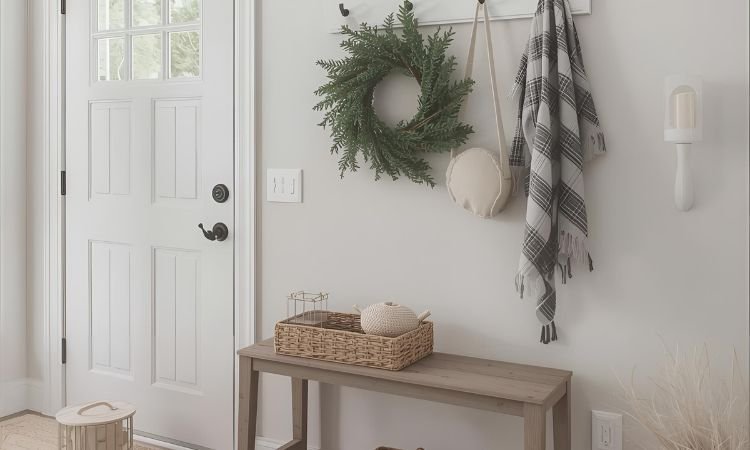
Hooks are non-negotiable in entryways, so you might as well make them look good. Cast iron hooks, wooden peg rails, or vintage-style numbered hooks all fit the farmhouse aesthetic. Mount them on a wood board or directly onto shiplap for a cohesive look.
Space your hooks about 4 to 6 inches apart so coats and bags don’t crowd each other. If you’ve got the wall space, a row of 4 to 6 hooks usually works for most families. And honestly, even when nothing’s hanging on them, good hooks add visual interest to an otherwise blank wall.
Farmhouse Signs and Typography
Wood signs with sayings are everywhere in farmhouse decor—”Gather,” “Welcome,” “Home Sweet Home,” that kind of thing. They can work if you choose wisely. Go for signs with simple fonts and neutral colors instead of overly cutesy or cluttered designs.
DIY signs often look better than store-bought ones because you can customize the size, color, and saying to fit your actual space and personality. A simple “Welcome” or your family name in clean lettering feels more authentic than mass-produced sayings everyone else has.
Wreath Displays
Wreaths aren’t just for doors. Hanging a wreath on your entryway wall—especially above a console table or between windows—adds softness and seasonal flexibility. Eucalyptus wreaths, cotton wreaths, or simple grapevine wreaths all fit the farmhouse vibe.
You can swap wreaths with the seasons without changing your whole decor scheme. Spring greenery, fall dried flowers, winter evergreen—the wreath changes but everything else stays the same. It’s an easy way to keep your entryway feeling fresh throughout the year.
Open Shelving
Floating wood shelves in a farmhouse entryway give you space to display small plants, baskets, framed photos, or seasonal decor. Keep them simple—one or two shelves max so the wall doesn’t feel too busy.
Style your shelves with a mix of functional and decorative items. Maybe a small basket for keys, a framed family photo, and a little plant. The goal is to look collected over time, not like you bought everything at once from the same store.
Mixing Textures and Finishes for Depth
Farmhouse style relies on texture to keep things interesting. You don’t want everything to be the same finish or material—that looks flat and one-dimensional.
Combining Wood Tones
Don’t stress about matching wood perfectly. Farmhouse style actually looks better when you mix different wood tones—weathered gray, natural pine, dark walnut. A lighter wood shelf with darker wood hooks and a medium-tone mirror frame creates visual depth.
The trick is making sure the woods vary enough that they clearly don’t match, so it looks intentional. Woods that are too close in tone but not quite the same just look like you tried to match and failed.
Metal Accents
Black metal, galvanized steel, or oil-rubbed bronze add contrast against all that wood. Metal hooks, mirror frames, or shelf brackets break up the warmth and give your entryway a more collected, layered feel.
Even small metal touches make a difference. Black metal house numbers mounted on wood, a metal tray on your shelf, or iron corbels supporting a floating shelf all contribute to that farmhouse mix of materials.
Soft Textiles
This might seem more furniture-related, but if you’ve got wall hooks, what hangs on them matters. Woven baskets mounted on the wall, a vintage quilt displayed on a ladder-style rack, or even fabric bunting adds softness that balances all the hard surfaces.
Textiles in neutral tones—cream, linen, soft grays—keep the farmhouse palette cohesive. They warm up the space and make it feel more inviting than if everything was wood and metal.
Color Schemes That Work for Farmhouse Entryways
Classic White and Neutrals
White walls with natural wood accents is the most traditional farmhouse look. It’s bright, clean, and makes small entryways feel more open. Add warmth with wood tones and texture through baskets and greenery.
This palette never feels cold because you’re layering in enough warm elements—wood, plants, maybe some cream or beige accents. It’s a safe choice that works in almost any home and doesn’t go out of style.
Warm Greiges and Taupes
Greige (that gray-beige hybrid) is huge in farmhouse decor right now. It’s warmer than gray, more sophisticated than beige, and it works beautifully with white trim and natural wood. Walls in soft greige with white shiplap and dark wood accents create a modern farmhouse look.
Taupe is similar—warm enough to feel cozy but neutral enough to work with everything. These colors make colorful decor and greenery pop without competing with them.
Accent Colors Done Right
If you want color beyond neutrals, stick with muted, earthy tones. Dusty blue, sage green, soft mustard, or terracotta all fit the farmhouse aesthetic. Use these as accent colors in small doses—a painted sign, a wreath, some pottery on a shelf.
The base should still be mostly neutral. Too much color shifts away from farmhouse and into something else entirely. One or two accent colors are plenty.
Layout Tips for Different Entryway Sizes
Small or Narrow Entryways
In tight spaces, keep wall decor simple and vertical. A narrow vertical mirror above a small shelf or hook rail maximizes function without taking up visual space. Avoid wide gallery walls or bulky shelving that makes the area feel cramped.
Light colors and mirrors help small entryways feel bigger. A white shiplap wall with a light wood mirror and simple hooks keeps things open and airy. Leave some empty wall space—you don’t need to fill every inch.
Medium-Sized Entryways
You’ve got room to layer here. Try a statement mirror as your focal point with a floating shelf below it. Add hooks on one side and maybe a small wreath or sign on the other to create balance.
Arrange elements in triangles or balanced groupings. If your mirror is centered, flank it with matching sconces or coordinate your shelf and hooks so they balance each other visually. Symmetry feels organized and intentional.
Large or Open Entryways
Big spaces can handle more dramatic elements. A full shiplap wall, oversized mirror, multiple shelves, and a longer hook rail all work. You can even create a gallery wall with multiple farmhouse elements—frames, signs, small wreaths arranged together.
In large entryways, anchor your wall decor with one big piece, then fill in around it. That could be a huge mirror, a large wooden sign, or even a statement piece of salvaged architecture like an old window frame. Everything else supports that anchor.
DIY Farmhouse Wall Decor Ideas
Reclaimed Wood Signs
Grab some old fence boards or pallet wood, sand them down a bit, and paint or stencil a simple word or phrase. Seal it with matte polyurethane and you’ve got a custom sign that actually looks authentically rustic.
You can distress new wood too if you can’t find reclaimed stuff. Sand the edges, add some dents with a hammer, stain it, then lightly sand again. It’ll look weathered and vintage without the hunt for actual old wood.
Painted Shiplap or Faux Shiplap
If installing real shiplap sounds like too much, paint horizontal stripes on your wall to mimic the look. Use painter’s tape to create clean lines about 6 inches apart, paint the stripes in a slightly different shade than the base wall, and you’ve got a shiplap effect.
Another option is thin plywood strips or MDF boards cut into planks and mounted horizontally. It’s way easier than tongue-and-groove shiplap and costs a fraction of the price.
Window Frame Mirror
Find an old window frame at a thrift store or salvage yard, clean it up, and fit mirrors into the panes. You can have glass cut to size at a hardware store pretty cheaply. Suddenly you’ve got a unique farmhouse mirror that looks like it’s been in your family for years.
Leave the frame as-is for a weathered look, or paint it white or black depending on your color scheme. Either way, it’s a statement piece that cost way less than buying something similar retail.
Mounted Baskets
Flat baskets mounted on the wall add texture and can even be functional. Tuck mail or small items into them, or just let them be decorative. Group three baskets in different sizes for visual interest.
You can usually find inexpensive baskets at thrift stores or discount home stores. Mount them with picture hangers or even just secure them with screws through the back.
Keeping It Functional While Styled
Your entryway needs to actually work for daily life—it’s not just a showroom. The best farmhouse entryway decor balances looking good with being useful.
Storage That Looks Good
Hooks should be sturdy enough for heavy coats. Shelves should hold the stuff you actually need by the door—keys, sunglasses, dog leashes. Baskets can corral smaller items while still looking decorative.
Think about what you and your family actually use when you come in the door, then build your decor around those needs. If you need five hooks but the design only has three, add more hooks. Function comes first.
Easy to Clean and Maintain
Entryways get dirty—that’s just reality. Choose decor that’s easy to wipe down or dust. Sealed wood, metal hooks, and simple frames are all low-maintenance.
Avoid anything too delicate or fussy. That gorgeous white fabric piece might look amazing, but if it shows every fingerprint and you have kids coming in and out all day, it’s not practical. Save the high-maintenance decor for rooms that don’t get as much traffic.
Common Mistakes to Avoid
Overloading with “Farmhouse” Elements
Just because something has the word “farmhouse” on it doesn’t mean you need it. Too many signs, too much distressed wood, too many roosters—it crosses from charming into theme park territory.
Choose a few strong elements and let them shine. You don’t need shiplap, a barn door, a giant wreath, ten signs, and a milk can all in the same entryway. Pick your favorites and keep it simple.
Ignoring Scale and Proportion
A tiny mirror in a big entryway looks lost. A huge sign in a small hallway overwhelms the space. Match your decor to the actual size of your walls.
Stand back and look at how things relate to each other size-wise. Your mirror should feel substantial enough to anchor the space. Hooks should be appropriately sized for the wall they’re on. Everything should feel balanced.
Forgetting About Lighting
Even beautiful wall decor looks dull in a dark entryway. Make sure you’ve got good lighting—whether that’s natural light from windows, overhead fixtures, or wall sconces.
If your entryway is naturally dark, lighter colors and mirrors become even more important. They reflect whatever light you do have and keep the space from feeling like a cave.
Final Thoughts on Creating Your Farmhouse Entryway
Farmhouse entryway decor works because it’s warm, welcoming, and practical. You’re creating a space that says “come in, get comfortable, this is home.” The best part is that it doesn’t require a huge budget or a ton of space—just thoughtful choices that fit your actual entryway and lifestyle.
Start with the basics—maybe a good mirror and some hooks. Add a shelf or a sign. Bring in a wreath or some greenery. Build your entryway decor gradually, choosing pieces that genuinely work for your space instead of trying to recreate someone else’s Pinterest board.
The goal isn’t perfection. It’s creating an entryway that feels like you, functions for your family’s needs, and makes everyone—including you—happy to walk through that door.