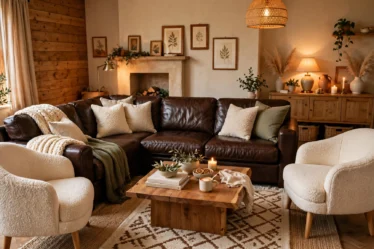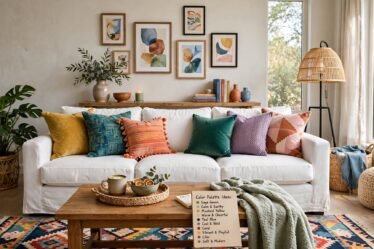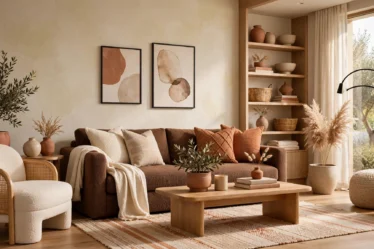
Okay, so here’s the thing about small living rooms. When you first move into a place with limited square footage, you stand there staring at those blank walls, wondering how on earth you’re going to make this space feel bigger and actually decorated. The floor space? Already spoken for. The corners? Maybe room for a plant if you’re lucky.
That’s when you realize—your walls are basically untapped real estate. And honestly? When you learn to style them right with a smart mix of shelves, plants, artwork, mirrors, lighting, textiles, and a few other clever tricks, you can completely transform how your space feels.
It’s not just about making things look pretty. It’s about making a small room feel open, personal, lived-in, and way more functional than it actually is.
If you’re trying to figure out how to decorate your small living room walls without turning them into a cluttered mess, you’re in the right place. Let’s walk through what actually works when space is tight.
Why Your Walls Are the MVP in Small Spaces
Look, when you don’t have a ton of floor space, you’ve gotta think vertically. It’s easy to try cramming too much furniture into a small living room—couch, coffee table, side tables, TV stand, bookshelf. Before you know it, the place looks cramped, feels crowded, and you’re constantly bumping into things.
But when you start treating your walls like extra storage and display space, everything changes. Floating shelves give you spots for books and decor without eating up floor space. Plants add life without requiring bulky pots on every surface.
Artwork creates personality without needing bulky furniture. String lights create ambiance without floor lamps hogging corners. And mirrors? They literally make the room feel twice as big.
The rules is being strategic about it. You can’t just throw everything up there and call it decorated. There’s definitely a balance between “perfectly styled” and “looks like a yard sale on your wall.”
Starting With Floating Shelves (Your Foundation)
Floating shelves are honestly where you should start. They’re versatile, relatively cheap, and you can arrange them in endless ways to fit your exact space and style.
Instead of going with the standard straight-line approach (which can look a bit boring and actually makes walls look shorter), consider an asymmetrical arrangement. One longer shelf on one side, then two or three shorter ones staggered on the other side creates this organic, collected-over-time vibe. Or try a geometric pattern—shelves at different heights creating visual interest.
Here’s what you need to know: measure twice, install once. Seriously. Get a level, use a pencil to mark where you want things, and step back to look at it from your couch before you commit. That view from where you actually sit matters way more than how it looks when you’re standing right in front of it.
For small living rooms, stick with shelves that are 6-8 inches deep. Anything deeper starts jutting out too much and makes the space feel tighter. And color-wise, lighter shelves tend to blend in better if you want them to feel less heavy on the wall. Light wood tones, white, or even glass shelves can practically disappear while still holding your stuff.
Once they’re up, layer things at different heights. Stack some books horizontally with a small plant on top, lean a framed photo against the wall behind other items, add a little ceramic piece in front. That layered, collected look feels way more interesting than just lining things up in a perfect row.
Bringing In Plants (The Life Factor)
Plants add so much life to a room—it’s actually wild how much difference they make. But in a small space, you need to be selective. Five or six well-placed plants beat fifteen crammed everywhere.
Trailing plants like pothos or string of pearls work amazing on higher shelves because they cascade down and soften all those hard edges. Pothos are ridiculously easy to keep alive too—water once a week, give them indirect light, and they’ll basically thrive forever.
For lower shelves or spots where you need something more compact, snake plants and small cacti are perfect. They grow upright, don’t take up much horizontal space, and snake plants are basically indestructible. Forget to water for three weeks? They’ll survive.
Mix in some wall-mounted planters too. Those geometric metal planters or hanging macramé holders add dimension without using any floor or shelf space. You can create a little vertical garden situation on an empty wall section, clustering three or four small plants at different heights.
Keep your pots simple and cohesive—white, terracotta, or light gray work with pretty much everything. When pots match or coordinate, the whole display feels more intentional even if you’re mixing different plant types.
Just check your lighting before you commit to plant spots. Most common houseplants need at least some indirect light, so be realistic about what your space offers.
Artwork That Actually Fits Your Space
Art can make or break a small living room wall. Go too big, and it overwhelms everything. Go too small, and it looks like you’re afraid to commit.
For small spaces, think about a gallery wall instead of one massive piece. Gallery walls let you showcase multiple pieces, photos, and prints without any single item dominating. The trick is planning your layout before you start hammering nails everywhere.
Lay everything out on the floor first. Move pieces around until you find an arrangement you like. Take a photo of it. Then, trace each frame on paper, tape the paper templates to your wall, and adjust until it looks right. Now you’ve got a blueprint before making any holes.
Mix frame sizes and orientations—some vertical, some horizontal, maybe a small square piece. But keep your frames somewhat coordinated. All black frames, all wood, or all white creates cohesion even when the art inside is totally different. You can mix metallics too, like combining gold and brass tones.
If gallery walls feel overwhelming, try a statement piece instead. One medium-sized canvas or framed print (around 24×36 inches) can anchor a wall beautifully. Abstract art, landscape photography, or even a bold graphic print can add serious personality without cluttering up the space.
And don’t sleep on removable wallpaper or wall decals. They’re renter-friendly, relatively inexpensive, and can create a whole accent wall situation. That botanical print wallpaper or geometric pattern can make a small living room feel intentionally designed instead of just… small.
Mirrors That Do Double Duty
Everyone talks about mirrors making small spaces look bigger, and honestly, yeah—it works. But placement is everything.
You want your mirror reflecting something good. Position it across from a window to bounce natural light around the room. Or place it where it reflects your plants or nicely styled shelves, basically doubling that greenery and visual interest.
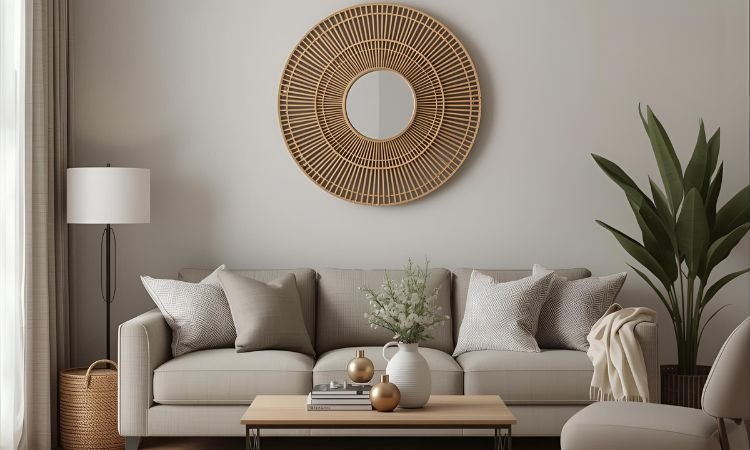
Round mirrors feel softer and more modern right now. A 24-30 inch round mirror with a thin metal frame (black, brass, or gold) makes a statement without overwhelming a small wall. Hang it at eye level—roughly 57-60 inches from the floor to the center of the mirror.
Or go for an oversized leaning mirror if you’ve got a bit of floor space. Leaning a tall mirror against the wall creates this effortless, collected vibe while still giving you all those space-expanding benefits. Plus, you don’t have to worry about hanging something heavy.
Sunburst mirrors are having a moment too. Those decorative mirrors with the rays or geometric frames around them double as art pieces while still being functional. They work great above shelves or as a centerpiece on an otherwise empty wall.
Lighting That Changes Everything
Good lighting is probably the most underrated element of wall decor. It can make a small living room feel cozy instead of cramped, and when you use wall-mounted or hanging options, you save precious floor space.
Battery-operated LED picture lights or puck lights above shelves create soft washes of light that highlight your plants and decor. They’re super easy to stick up, and you can angle them however you want. At night, they add this subtle glow that makes everything feel more intentional.
String lights or fairy lights can work in small living rooms if you’re strategic about it. The key is subtlety—warm-toned lights with thin copper wire, draped along shelf tops or around a mirror frame. You want to see the glow more than the actual wire. One 10-foot strand is usually plenty.
Wall sconces are amazing if you own your place or have a landlord who’s cool with installations. Modern sconces with brass or matte black fixtures flanking a mirror or artwork? Absolutely beautiful. They free up side table space and add this sophisticated layer to your lighting scheme.
LED strip lights behind floating shelves or along the top of your wall (where it meets the ceiling) create ambient backlighting that actually makes your ceiling feel higher. It’s a subtle trick that adds depth without taking up any visual space.
Textiles and Soft Elements
This is where a lot of people overlook opportunities. Textiles on walls add warmth, texture, and sound dampening—which is great in small spaces that can feel echo-y.
Woven wall hangings or macramé pieces bring in that bohemian, cozy texture without adding clutter. A medium-sized tapestry or woven piece (maybe 2×3 feet) can anchor a wall section beautifully. They’re especially nice above a couch or in a corner that feels empty.
Small decorative baskets mounted on walls add both texture and function. You can tuck small items in them or just use them as decorative elements. Three or four flat baskets in varying sizes arranged on a wall create this organic, global-inspired look.
Floating fabric panels or tension rods with lightweight curtains can section off areas or add color without permanent installation. Sheer fabrics in particular can define spaces while keeping things feeling open and airy.
Functional Wall Decor That Earns Its Keep
In small living rooms, everything should probably serve more than one purpose. That’s where functional wall decor comes in clutch.
Wall-mounted media consoles keep your entertainment setup off the floor. They’re sleek, modern, and they make cleaning underneath way easier. Plus, they often come with built-in storage or display areas for decor items.
Pegboards aren’t just for garages anymore. A painted pegboard (try a soft sage green or dusty blue) with wooden pegs can hold magazines, small plants, keys, or decorative items. It’s like a modular organization system that doubles as wall decor.
Floating desks or drop-down tables work great if you need workspace but don’t have room for a full desk. Mount one on a wall, fold it up when you’re not using it, and boom—instant extra space.
Built-in niches or alcoves (if your place has them) are perfect for styling. Add a small shelf, some LED strip lights inside, and display your favorite books or collectibles. It’s like creating a little showcase moment without taking up any actual room.
Clock and Decorative Accents
A statement wall clock can be both functional and decorative. Oversized minimalist clocks (like those 20+ inch ones with simple hands and no numbers) create a focal point while still being useful. Or go vintage with a retro-style clock that adds personality.
Metal wall sculptures or geometric wire designs add dimension without bulk. They catch light differently throughout the day and create visual interest that flat art sometimes can’t achieve.
Decorative shelves in interesting shapes—hexagons, triangles, curved designs—become art pieces themselves while still being functional. Cluster a few together for a modern, sculptural look.
Letter boards or peg letter boards let you switch up your message or quote regularly. They’re interactive wall decor that can change with your mood, the season, or whatever quote you’re currently obsessed with.
Bringing It All Together Without Overwhelm
Here’s the reality check: you can’t do everything. And trying to will just make your small living room feel cramped and chaotic.
Pick your main elements—maybe shelves with plants, a gallery wall, and a mirror. Then add 2-3 supporting elements like lighting and a textile piece. That’s plenty. If you try to incorporate wall-mounted desks, pegboards, fifteen pieces of art, floating consoles, and everything else, it becomes too much.
Work in zones. One wall gets the main shelf and plant situation. Another wall gets the gallery wall or statement art piece. The mirror lives where it can reflect light best. Lighting gets distributed to support everything else.
Leave breathing room. Not every wall needs something on it, and not every inch needs to be filled. White space (or whatever your wall color is) gives your eye places to rest and actually makes the room feel bigger.
Color coordination helps tie everything together without being matchy-matchy. Pick a general palette—maybe whites, greens, natural wood tones, and black metal accents—and stick mostly to that. It’ll all feel cohesive even when you’re mixing different types of decor.
Shop your home first before buying new stuff. That ceramic bowl you never use? Perfect for a shelf. Candles from another room? Great for adding height variation. The art that’s been in your closet? Maybe it works better in here.
Making It Work for Renters
If you’re renting, remember that every nail hole is one more thing to patch when you move out. Be strategic about installations, and use Command strips whenever possible for lightweight items.
Picture hanging strips work great for frames under 8 pounds. Cable systems or gallery hanging kits let you hang multiple pieces from just a few anchor points. Tension rods need zero holes and can hold curtains or fabric panels.
For shelves, look for damage-free options or be prepared to spackle and paint when you leave. Some landlords are cool with a few holes, others aren’t—know your lease before you start drilling.
The Setup That Works
At the end of the day, decorating small living room walls isn’t about cramming in as much as possible. It’s about choosing pieces that serve multiple purposes—looking good while also making the space feel bigger, brighter, more functional, and more like you.
Start with one element, maybe floating shelves or a mirror, and build from there. You don’t have to do everything at once. Add pieces gradually, move things around, swap out items that aren’t working. Half the fun is in the experimenting.
Your small living room walls have so much potential. They can hold your favorite books, keep plants thriving, reflect light, showcase art, provide extra lighting, add texture and warmth, and even offer storage—all while saving precious floor space.
Just take it slow, measure before you drill, and don’t be afraid to try things. That wonky arrangement you’re worried about? You can always move it. The plant that might not work there? Try it somewhere else. The art that feels wrong? Switch it out.
Small spaces don’t mean limited style. Sometimes they actually force you to be more creative and intentional with what you choose. And when you get it right—when those walls are working hard and looking good—your small living room can feel like the coziest, most you space ever.