
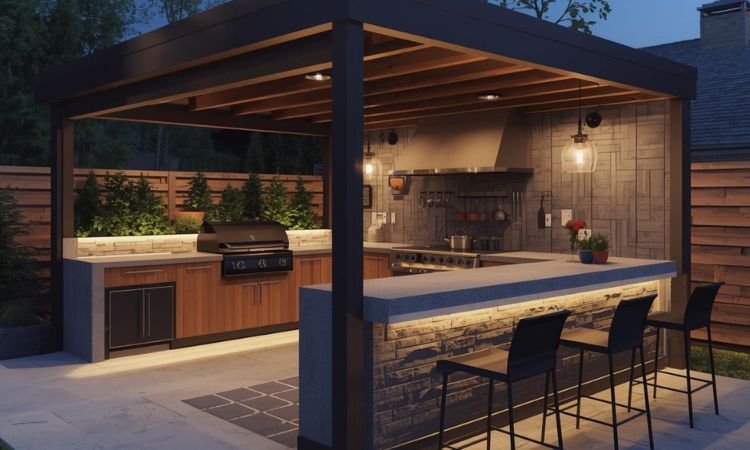
Homeowners spend an average of $15,000-$30,000 on outdoor kitchens, yet 40% report using them less than expected after installation. The disconnect happens when stunning designs ignore practical realities—inadequate counter space, poor weather protection, or layouts requiring constant trips indoors. Money gets spent while frustration builds.
Outdoor patio kitchen ideas reveal which configurations deliver real utility, appropriate scale, and lasting value. The best designs combine practical workflow with weather resistance creating spaces that get used 3-4 times weekly during season rather than collecting dust between occasional cookouts.
We’re covering 11 outdoor patio kitchen ideas featuring setups that balance function with durability. These proven approaches work across budgets providing the cooking capability and outdoor living quality that makes patio kitchens worthwhile investments rather than expensive regrets.
Essential Qualities of Outdoor Patio Kitchens
- Protected Cooking Areas Extend Seasons: Covered workspaces allow cooking during light rain or intense sun rather than perfect-weather-only use. It’s like indoor flexibility where weather becomes suggestion not limitation. The overhead protection creates year-round utility defining successful outdoor kitchens.
- Weatherproof Materials Prevent Constant Replacement: Outdoor-rated cabinets, sealed countertops, and rust-resistant hardware withstand elements that destroy standard materials within 2-3 seasons. It’s like armor where proper materials prevent deterioration. The weather-appropriate selections maintain appearance and function through years of exposure.
- Efficient Layouts Reduce Indoor Trips: Strategic placement of prep zones, cooking areas, and storage keeps essentials accessible eliminating the 8-12 trips back inside typical during outdoor cooking. It’s like workflow optimization where smart arrangement saves steps. The thoughtful layouts create genuine outdoor cooking independence.
- Adequate Counter Space Enables Real Cooking: Minimum 4-6 feet of workspace allows simultaneously handling raw ingredients, plated food, and cooking tools rather than dangerous plate-juggling. It’s like professional kitchens where surface area determines capability. The generous counters separate functional spaces from decorative ones.
11 Outdoor Patio Kitchen Ideas
Create functional weather-resistant cooking spaces with these outdoor patio kitchen ideas featuring proven configurations delivering lasting value.
L-Shaped Configuration
Build L-shaped layouts maximizing corner space while creating natural workflow zones. The perpendicular arrangement provides 8-12 feet of combined counter length using compact footprint. It’s like efficiency design where angles multiply functionality.
Position grill on one leg with prep area on the other creating separation between heat and food handling. The corner accommodates sink or beverage cooler. This outdoor patio kitchen classic delivers maximum workspace within limited square footage.
Compact Cart Station
Use high-quality rolling carts providing flexibility for renters or budget-conscious starts. The mobile units offer 20-30 inches of prep space with lower storage while remaining relocatable. It’s like temporary commitment where investment stays minimal.
Choose stainless steel or powder-coated aluminum resisting rust and weathering. Lock wheels during use preventing movement. This outdoor patio kitchen entry option delivers functionality without permanent installation requirements.
Island Layout
Install freestanding islands creating 360-degree access and entertainment-friendly cooking. The central placement with 36-48 inch perimeter workspace allows hosts facing guests while preparing food. It’s like theater kitchens where cooking becomes performance.
Include seating on one side with cooking equipment opposite. Add storage underneath maximizing utility. This outdoor patio kitchen arrangement works best with 12×16 foot minimum patio dimensions providing adequate circulation.
Galley Style Setup
Create linear galley kitchens along fence lines or house walls utilizing narrow spaces efficiently. The straight 10-15 foot runs provide full functionality within 3-4 foot depths. It’s like bowling alleys where length compensates for width limitations.
Arrange workflow logically—refrigeration, prep, cooking, serving—following natural progression. Mount overhead storage or shelving maximizing vertical space. This outdoor patio kitchen solution fits tight side yards and small patios perfectly.
Modular Component System
Assemble modular outdoor kitchen units allowing customization and future expansion. The individual cabinets, grill housings, and specialty stations connect creating cohesive appearance while maintaining flexibility. It’s like building blocks where configuration adapts over time.
Match finishes across components ensuring visual consistency. Add sections gradually spreading costs across seasons. This outdoor patio kitchen approach accommodates changing needs and budget availability.
Built-In Grilling Station
Construct permanent grilling stations with flanking prep surfaces and storage below. The dedicated 6-8 foot sections house quality built-in grills with side burners surrounded by working counters. It’s like command centers where everything revolves around primary cooking.
Use concrete board or cement backer creating fire-resistant structure. Finish with stucco, stone veneer, or tile matching home exterior. This outdoor patio kitchen investment provides professional capability and permanent value.
Bar-Height Counter Design
Build raised 42-inch bar-height counters combining cooking and dining functions. The elevated surfaces accommodate bar stools allowing 4-6 guests eating where food gets prepared. It’s like sushi bars where diners watch preparation.
Include lower 36-inch prep section behind bar maintaining ergonomic working height. The dual-level approach separates cooking from socializing. This outdoor patio kitchen style maximizes space efficiency through multi-purpose design.
Pergola-Covered Kitchen
Install pergolas over cooking areas providing shade, rain protection, and mounting points for lighting. The overhead structures with 10×12 foot minimum coverage extend usability through weather variations. It’s like outdoor rooms where defined ceilings create comfort.
Add retractable canopy or shade cloth for adjustable protection. Run electrical through posts supporting lighting and outlets. This outdoor patio kitchen enhancement transforms exposed spaces into sheltered cooking zones.
Corner Angle Setup
Utilize patio corners with angled configurations fitting awkward spaces while creating interest. The diagonal placement with 45-degree angles provides surprising counter length within compact footprints. It’s like geometry solutions where angles unlock potential.
Position grill at apex with wings extending along adjoining walls. The corner location protects from wind while using otherwise wasted space. This outdoor patio kitchen strategy maximizes difficult areas creatively.
Minimalist Single-Wall Design
Create streamlined single-wall kitchens providing essentials without overwhelming small patios. The focused 5-6 foot sections include grill, small prep area, and minimal storage delivering core functionality. It’s like edited versions where less proves sufficient.
Choose compact appliances scaled appropriately—24-inch grills, apartment-size refrigerators, single-basin sinks. Keep design simple preventing cluttered appearance. This outdoor patio kitchen approach suits modest budgets and limited spaces.
Sunken Conversation Kitchen
Build sunken or lowered cooking areas creating intimate gathering spaces around fire and food. The recessed sections with surrounding seating place guests at cook’s eye level encouraging interaction. It’s like campfire circles where design fosters connection.
Excavate 12-18 inches creating stepped access and built-in bench seating. Include fire feature opposite cooking area. This outdoor patio kitchen concept works with larger yards and significant budgets creating destination spaces.
Planning Outdoor Kitchens Successfully
- Prioritize Big Three Appliances: Start with quality grill, refrigeration, and sink establishing core functionality before adding specialty items. It’s like foundations where basics matter most. The essential equipment delivers 90% of outdoor cooking capability.
- Plan Utility Connections Early: Run electrical, plumbing, and gas lines during initial construction preventing expensive retrofitting later. It’s like infrastructure where hidden systems enable visible features. The proper utilities support full kitchen functionality.
- Choose Materials Rated for Exposure: Select stainless steel, marine-grade polymer, or sealed wood products designed withstanding moisture, temperature swings, and UV damage. It’s like marine equipment where ratings indicate durability. The weather-appropriate materials prevent premature failure.
- Include Adequate Lighting: Install task lighting over work surfaces, ambient lighting for atmosphere, and safety lighting along pathways. It’s like indoor kitchens where visibility enables function. The proper illumination extends usability into evening hours.
Frequently Asked Questions About Outdoor Patio Kitchens
What Are Essential Outdoor Kitchen Components?
Grill, prep counter, storage, and refrigeration form outdoor kitchen foundations. These core elements provide basic cooking capability. Add sink if plumbing access exists creating complete functionality.
Budget determines appliance quality and material selection more than component list. Start with essentials adding specialty items—pizza ovens, warming drawers, ice makers—after experiencing basic setup usage patterns.
How Much Space Do You Need?
Minimum 8×10 feet accommodates basic outdoor kitchen with grill and modest prep area. Comfortable setups require 10×15 feet allowing adequate workspace and circulation. Elaborate designs with seating need 12×20 feet minimum.
Measure existing patio determining realistic footprint. Outdoor kitchens consuming entire patio eliminate relaxation space defeating entertainment purpose. Balance cooking area against lounging zones.
Can You Build Outdoor Kitchen on Budget?
Yes—prefabricated islands cost $2,000-$5,000 providing complete functionality. Quality cart setups run $800-$1,500 delivering mobility and basics. DIY construction using concrete blocks and tile reduces costs significantly versus professional installation.
Prioritize weatherproof structure and quality grill over fancy features. Add components gradually as budget allows. The phased approach spreads expenses while creating immediately usable spaces.
What About Winter Weather Protection?
Weatherproof covers protect appliances during off-season. Drain plumbing preventing freeze damage in cold climates. Store cushions and fabric items indoors avoiding moisture deterioration.
Stainless steel and sealed cabinetry withstand winter exposure better than wood or particle board. Choose materials appropriate for local climate reducing seasonal maintenance burden. The weather-resistant selections minimize winterizing requirements.
How Do You Maintain Outdoor Kitchens?
Clean grills after each use preventing grease buildup. Wipe counters removing food residue attracting pests. Inspect caulking and seals annually preventing water infiltration.
Cover equipment when not in use protecting from elements. Deep clean storage areas seasonally removing debris and checking for pest activity. The regular maintenance prevents major repairs while extending equipment lifespan.
Creating Your Outdoor Cooking Space
Outdoor patio kitchen ideas reveal that functional cooking spaces come from prioritizing workflow over aesthetics initially. The practical configurations deliver real utility while handling weather exposure. The smart planning creates kitchens that enhance outdoor living rather than becoming expensive disappointments.
Start with utility planning and essential appliances before adding decorative elements. Choose materials and components suited to your specific climate and usage patterns. The thoughtful approach creates outdoor kitchens that justify investment through regular use and lasting performance.
What outdoor kitchen feature would you prioritize first? Share your outdoor cooking plans below!