
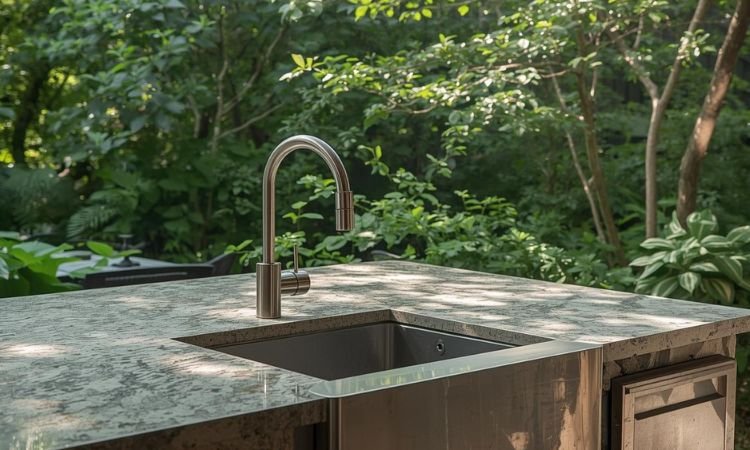
Outdoor kitchens without sinks require an average of 15-20 trips back inside during typical meal preparation according to outdoor living surveys. The constant movement between spaces kills efficiency while tracking dirt and moisture indoors. Yet poorly planned sink installations waste $1,500-$3,000 on plumbing connections that barely get used.
Outdoor kitchen sink ideas reveal which configurations deliver genuine utility versus decorative additions that complicate installation without improving function. The best setups combine practical placement with weatherproof construction creating washing stations that earn their keep through regular use.
We’re covering 11 outdoor kitchen sink ideas featuring installations that balance convenience with durability. These proven approaches work across budgets providing the washing capability and water access that makes outdoor sinks worthwhile additions rather than expensive afterthoughts.
Key points we’re exploring:
- Sink types suited for outdoor exposure and use
- Plumbing connection options and requirements
- Placement strategies maximizing workflow
- Material selections withstanding weather
- Size considerations for different needs
- Drainage solutions preventing problems
Essential Qualities of Outdoor Kitchen Sinks
Weather-Resistant Materials Prevent Deterioration: Stainless steel, stone, or composite materials withstand freeze-thaw cycles and UV exposure that crack porcelain or damage standard fixtures within 1-2 years. It’s like marine equipment where material ratings determine lifespan. The outdoor-rated construction maintains function through continuous weather exposure.
Proper Drainage Prevents Standing Water: Adequate slope toward drain with 1.5-2 inch diameter drain lines moves water efficiently preventing mosquito breeding and freeze damage. It’s like civil engineering where flow rates determine success. The proper drainage eliminates health hazards and winter problems.
Strategic Placement Reduces Wasted Steps: Positioning within 3-4 feet of primary prep area keeps washing accessible without crossing traffic paths or moving away from cooking zones. It’s like industrial workflow where proximity determines efficiency. The thoughtful placement saves hundreds of unnecessary steps during cooking.
Adequate Basin Size Handles Real Tasks: Minimum 15×15 inch basin accommodates large cutting boards, baking sheets, and serving platters rather than handling only hand washing. It’s like commercial sinks where dimensions enable actual work. The appropriately sized basins provide genuine utility beyond token water access.
11 Outdoor Kitchen Sink Ideas
Create functional weather-resistant washing stations with these outdoor kitchen sink ideas featuring installations that deliver practical performance.
Undermount Stainless Basin
Install undermount stainless steel sinks providing seamless integration with stone or concrete counters. The below-counter mounting allows wiping debris directly into basin while commercial-grade stainless withstands outdoor conditions indefinitely. It’s like professional setups where function drives design choices.
Choose 16-gauge or thicker stainless preventing denting from heavy pots. Include bottom grid protecting basin surface. Costs run $200-$500 for quality undermount units. This outdoor kitchen sink delivers clean lines with maximum durability.
Drop-In Utility Sink
Use drop-in sinks offering easier installation and replacement versus undermount styles. The lip-mounted design sits atop counter cutout creating simple weatherproof seal while allowing future upgrades. It’s like modular components where accessibility matters.
Select deep basins—8-10 inches—handling large items and reducing splashing. Stainless steel or composite materials both work well outdoors. Expect costs around $150-$400 installed. This outdoor kitchen sink suits DIY installations and budget-conscious builds.
Bar Sink Station
Install compact bar sinks providing hand washing and beverage prep without consuming valuable prep space. The 12-15 inch round or square basins fit tight areas while handling essential tasks. It’s like powder rooms where small fixtures serve specific purposes.
Position near beverage cooler or seating areas rather than cooking zones. Add pullout or gooseneck faucet improving functionality. Costs range $100-$300 for sink and faucet. This outdoor kitchen sink works when full-size basin exceeds needs or space.
Farmhouse Apron Front
Create traditional aesthetics with farmhouse-style apron front sinks. The exposed front panel and deep basin provide vintage charm while fireclay or stainless construction handles outdoor exposure. It’s like country kitchens where style meets substance.
Ensure proper support for heavy fireclay models requiring reinforced cabinetry. The large single basin accommodates oversized items easily. Expect costs $400-$800 for quality outdoor-rated models. This outdoor kitchen sink delivers statement piece with practical depth.
Prep Sink with Cutting Board
Combine small prep sinks with integrated cutting board covers creating dual-purpose workstations. The 15×18 inch basins with fitted boards provide chopping surface that reveals sink when removed. It’s like convertible furniture where space serves multiple functions.
Choose stainless with rounded corners easing cleaning and preventing debris collection. Include bottom grid and cutting board in matched materials. Costs run $250-$500 for integrated systems. This outdoor kitchen sink maximizes limited counter space efficiently.
Corner Basin Installation
Utilize corner spaces with angled or curved sinks fitting diagonal placements. The corner-mounted basins use otherwise awkward areas while maintaining ergonomic access. It’s like geometry solutions where angles create opportunity.
Match basin shape to counter configuration—radius curves for rounded corners, angled for 45-degree installations. Ensure adequate elbow room around fixture. Expect costs $200-$450 for specialty corner models. This outdoor kitchen sink optimizes difficult layout challenges.
Double Bowl Configuration
Install double bowl sinks separating washing from rinsing or food prep from cleanup. The divided basins with 60/40 or 50/50 splits handle multiple simultaneous tasks. It’s like assembly lines where separation increases efficiency.
Choose models with low or no divider between bowls accommodating large items across both sides. Stainless construction with sound dampening reduces noise. Costs range $300-$700 for quality double bowls. This outdoor kitchen sink suits serious cooking requiring workspace separation.
Trough Style Sink
Use elongated trough sinks providing extended washing area for multiple users. The 48-60 inch linear basins allow several people washing simultaneously during large gatherings. It’s like commercial restrooms where length serves capacity.
Include multiple faucets spaced along trough or single high-arc unit reaching entire length. Slope toward center drain preventing standing water. Expect costs $500-$1,200 for custom trough installations. This outdoor kitchen sink handles entertaining-focused layouts.
Portable Camping Sink
Connect portable camping sinks to garden hoses providing temporary washing stations without permanent plumbing. The self-contained units with foot pumps or electric pumps offer flexibility for evolving outdoor spaces. It’s like pop-up solutions where commitment stays minimal.
Choose models with 5-7 gallon fresh water capacity and similar gray water storage. Position on stable surface near water source. Costs run $80-$200 for quality portable units. This outdoor kitchen sink suits renters or experimental setups.
Integrated Cooler Sink Combo
Combine sink basins with adjacent ice bins creating beverage and prep stations. The unified design with insulated cooler section beside working sink handles drink service and food prep simultaneously. It’s like swiss army approaches where integration saves space.
Ensure proper drainage from both sink and cooler preventing cross-contamination. Stainless construction throughout handles moisture from both functions. Costs range $600-$1,500 for integrated units. This outdoor kitchen sink maximizes functionality within compact footprint.
Stone Vessel Basin
Install natural stone vessel sinks creating luxury focal points with organic beauty. The above-counter basins carved from granite, marble, or river rock provide dramatic aesthetics while stone naturally withstands outdoor conditions. It’s like sculpture where function meets art.
Pair with tall faucets clearing vessel rim and ensure counter reinforcement supporting stone weight. Accept that natural stone requires sealing maintaining stain resistance. Expect costs $400-$1,000 for carved stone vessels. This outdoor kitchen sink delivers premium appearance with inherent durability.
Planning Outdoor Sink Installations
Assess Plumbing Access Realistically: Running hot and cold water lines plus drainage to outdoor locations costs $800-$2,500 depending on distance and obstacles. It’s like infrastructure where hidden costs determine feasibility. The honest cost assessment prevents budget surprises during installation.
Include Hot Water When Possible: Hot water connections improve grease removal and hand washing comfort extending sink utility. It’s like indoor standards where temperature matters. The hot water addition increases installation cost $200-$500 but significantly improves functionality.
Plan for Winterization in Cold Climates: Install shut-off valves and drain points allowing complete water removal preventing freeze damage. It’s like seasonal prep where protection prevents repairs. The winterization provisions save thousands in freeze-related damage.
Consider Gray Water Handling: Check local codes regarding outdoor sink drainage as some jurisdictions require connection to sewer systems while others allow dispersion. It’s like legal compliance where regulations determine options. The code research prevents illegal installations requiring expensive corrections.
Frequently Asked Questions About Outdoor Kitchen Sinks
What Type of Sink Works Best Outdoors?
Stainless steel sinks provide best outdoor performance due to rust resistance, durability, and temperature tolerance. Choose 16-18 gauge commercial-grade models withstanding abuse. Stone and high-quality composite materials also work well when properly sealed.
Avoid porcelain, standard acrylic, or cast iron outdoors as these materials crack, chip, or rust under weather exposure. Material selection determines whether sink lasts decades or fails within seasons.
How Much Does Outdoor Sink Installation Cost?
Basic drop-in sink with simple plumbing runs $600-$1,200 installed including fixtures. Complex installations requiring extensive plumbing runs, hot water connections, or custom drainage cost $2,000-$4,000. Material choices significantly impact totals with specialty sinks adding $500-$1,000.
Distance from existing plumbing determines largest cost variable. Outdoor sinks requiring 50+ feet of underground lines cost substantially more than installations near house connections.
Can You Install Sink Without Running Water?
Yes—portable camping sinks or hand pump models provide washing capability without plumbing connections. These units require manual filling and gray water disposal but avoid installation costs. Another option involves gravity-fed systems using elevated water tanks and simple drainage.
Non-plumbed options suit temporary setups or situations where permanent plumbing proves impractical. Accept limitations regarding water volume and convenience compared to connected fixtures.
What About Drainage Requirements?
Outdoor sinks require minimum 1.5 inch drain lines maintaining adequate flow preventing clogs. Route drainage to sewer connection, septic system, or approved dispersion area depending on local codes. Include P-trap preventing sewer gas while allowing cleanout access.
Ensure proper slope—1/4 inch drop per foot minimum—throughout drain run. Cold climate installations need drain lines below frost depth or complete winterization capability preventing freeze damage.
How Do You Maintain Outdoor Sinks?
Clean stainless basins weekly with mild soap preventing mineral buildup and staining. Rinse thoroughly after each use removing food particles. Run water briefly before winter shutdown flushing debris from lines.
Winterize cold climate installations by shutting water supply, opening faucets, and using compressed air blowing residual water from lines. Remove drain traps storing indoors preventing freeze damage. Apply mineral oil to stainless periodically maintaining luster and preventing corrosion.
Creating Your Outdoor Washing Station
Outdoor kitchen sink ideas reveal that thoughtful planning separates functional additions from expensive mistakes. The proper material selection, placement strategy, and plumbing design create washing stations that genuinely improve outdoor cooking rather than becoming rarely-used fixtures.
Start by honestly assessing how often you’ll use outdoor sink before committing to installation costs. Match sink size and features to actual needs rather than installing oversized basins consuming budget and space. The realistic approach creates outdoor sinks earning their investment through regular utility.
What sink feature matters most for your outdoor kitchen? Share your washing station priorities below!